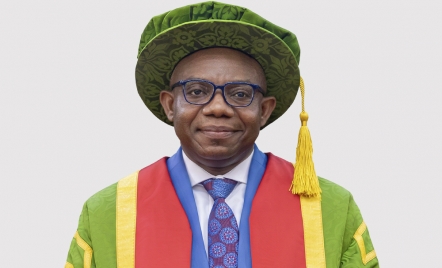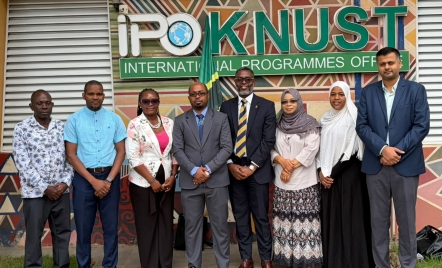
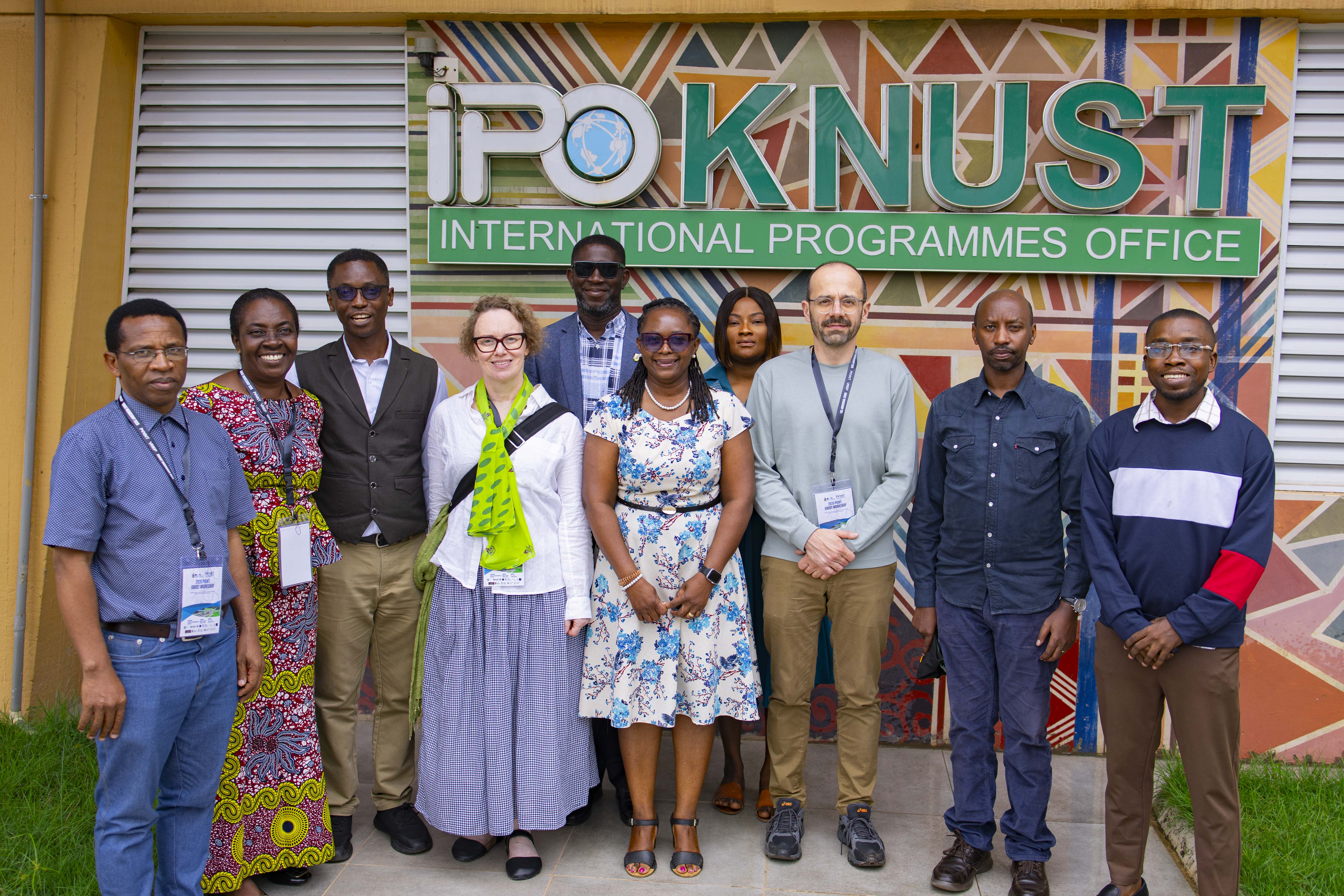
On Tuesday, June 9, 2026, the Vice-Dean of the International Programmes Office (IPO), Prof. (Mrs.) Augustina Angelina Sylverken, received a delegation of researchers from the POINT Project who paid a courtesy call to the Office during their visit to Kwame Nkrumah University of Science and Technology (KNUST).
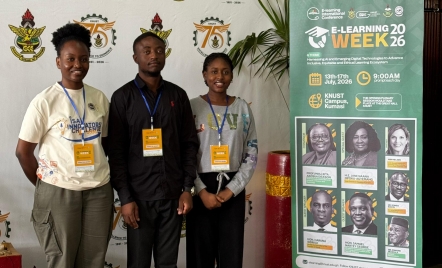
The delegation is at KNUST to participate in an intensive one-week workshop under the POINT Project, a collaborative research initiative supported by the Volvo Research and Educational Foundations (VREF), which focuses on co-creating practical and evidence-based solutions for sustainable urban mobility in Sub-Saharan Africa, with particular emphasis on Ghana and Rwanda.
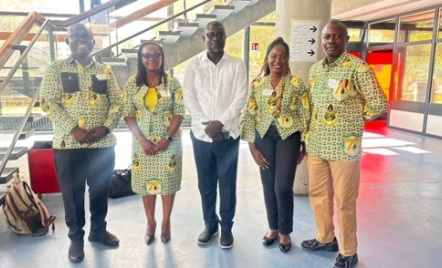
The team, comprising of Dr. Taru Tuulia Niskanen from Aalto University, Finland, as well as Prof. Tim Schwanen, Dr. Ernest Uwayezu, and Dr. Alphonse Nkurunziza from the University of Rwanda, were accompanied by KNUST project leads, Prof. Alexander Boakye Marful, Prof. Esmeranda Manful, and Prof. Francis Davis.
During the meeting, the delegation highlighted that the POINT (Popular-to-Popular Transport Integration) Project goes beyond transport systems and statistical analyses by focusing on the lived experiences of people who keep cities moving daily, whether by minibus, motorcycle, or on foot. Stating, it also seeks to address the social, political, and practical dimensions of urban mobility while generating context-specific solutions for sustainable transportation systems.
Welcoming the delegation, Prof. (Mrs.) Sylverken commended the team for undertaking impactful research that addresses the multifaceted nature of urban transport systems in Ghana and Rwanda. She noted that the project’s approach, which integrates social and political dimensions of mobility, demonstrates a comprehensive understanding of the realities surrounding transportation in African cities.
She further lauded the initiative for bringing together international partners to share knowledge and establish common standards for data collection and research implementation. According to her, such collaborations strengthen the quality, credibility, and global relevance of the project’s outcomes while contributing meaningfully to sustainable urban development in the region.
Prof. (Mrs.) Sylverken assured the delegation of KNUST’s continuous support towards the successful implementation of the project and its associated activities.